
Monster and miscellany
Recent reading and watching

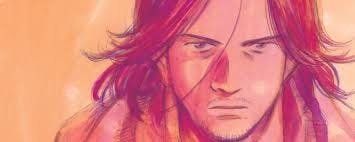
I just finished watching Monster, a 74-episode anime series that follows a doctor who is accused of murder as he attempts to uncover the mystery of what happened.
Given that part of the enjoyment of the show is the actual unfolding of the mystery, I will not share any of the plot here. Eventually I want to write a large review of the entire top 50 anime titles.1 That is where I will consider it without worrying about possible spoilers.
Do I recommend it? Yes. Several people on Substack said they stalled out in the last third:
Reinhardt has “seen the first episode of Monster like 4 times and [has] yet to commit.”
Emil Oppeln-Bronikowski reports, “I stopped watching around 60ish episode and never picked it up again. Now I’ll have to start it over because I don’t think I remember all the story beats. Maybe this winter.”
Adrian says, “It is so good initially. Never read the manga but about 2/3 of the way in, it became tedious for me. Just wrap it up already. Drags on its last few arcs”
Uncle D.iogenes, with very little effort, convinced me to buy 20th Century Boys, another manga by Naoki Urusawa, the author of Monster.
I agree generally that the series could have been shorter by cutting the last few arcs. And (again no spoilers), I have to say I wasn’t entirely satisfied with the resolution of all the plotlines. Nonetheless, I recommend it.
Enneads of Plotinus
There was an episode of Monster where it is revealed that a boy was raised his entire life being taught that the world is horrible and cruel. The man saying this to the boy uses it as an excuse to physically abuse, claiming that it is making him stronger. This horrifying setup is resolved when the boy believes that the world is good and chooses to leave his abuser.
Whether the world is good or evil is the subject of Plotinus’ tractate written against the Gnostics. It seems like a theoretical question, a merely philosophical point of dispute, and yet the episode shows how radically different are the lives of those who hold to the opposite doctrines. Dr. Tenma, a believer that life and the world are good, dedicates himself to saving people, even those who seek to end his life. The former worker of the Ministry of the Interior, who believes the world is evil, acts and speaks in a way that he understands to be a natural result of how the world is structured.
St. Thomas Aquinas had especial opprobrium for those who believed that creation was a wicked product of a wicked God.
“It is argued according to the insanity of certain people, that corporeal things were caused by an evil god, […] and that is the worst heresy” (In IV Sent., D.26, q.1, a.3.).
“Even as to the genus of the sin, the Manichean heresy is more grievous than the sin of other idolaters, because it is more derogatory to the divine honor, since they set up two gods in opposition to one another, and hold many vain and fabulous fancies about God. It is different with other heretics, who confess their belief in one God and worship Him alone” (II-II, q. 94, a. 3, ad. 4).
It is the worst heresy. The word Thomas uses is pessima, and I would have translated this as something like a most awful heresy, but I think it is meant to be an absolute superlative: It is the worst heresy. It is a conviction that makes one despair of obtaining either truth or goodness, and makes one suspicious when they seem to appear.
The author of the world is good. And, despite defects that appear in it, the world itself is good and points to what is even better than itself.
The Daughter of Time by Josephine Tey
It’s probably 10 years since someone first recommended that I read The Daughter of Time by Josephine Tey. A group of students was reading the historical plays of Shakespeare and this one friend expressed his disinterest by accusing Shakespeare of presenting a false account of the life of Richard III. He seemed to get this conviction from Josephine Tey.
I had nearly forgotten this recommendation until I read about her recently in a magazine.
It’s a mystery novel! But unlike most mystery novels where a sleuth is going to the scene of the crime and looking at clues (I don’t actually read mystery novels; this is only my impression), it takes place almost entirely within a hospital room. A police detective is laid up, and one of his friends brings him a handful of interesting portraits. The one that catches his fancy is a portrait of Richard III. It is not the face of a murderer. The old story is that Richard murdered his two royal nephews, but this just seems off to the detective who has an eye for criminal faces.
And so he spends the rest of the book checking out books from the library and asking friends of friends to do research into the historical records that will shed light on the matter. (I’m a little over halfway through, but this is the plot so far.)
I started reading this before I started to watch Monster and yet the themes overlap. There are many who look at the face of Tenma and just know: This is not the face of a murderer. The show takes place in the 1990s, and yet the effects of oppression in East Germany are still felt. Under the Communist regime and in the aftermath of reunification, it was not uncommon for accusations to fly—one learned how to look at a face and see if someone was guilty or innocent. Of course, a look can only make one suspect. Evidence is needed to convict.
In Monster, Detective Lunge is assigned to Tenma’s case. He takes everything into account, even placing himself in the shoes and minds of the suspects. Whenever he talks to anyone, his fingers seem to go wild as he simulates the act of typing on a keyboard—committing every fact and detail to his mental database.
Anyway, the only connection here is that there are detectives in both works. That’s it.
“Truth is the Daughter of Time, not of Authority.” —Francis Bacon
Aftermath by Harald Jähner
While watching this show, I thought, “Wait, why was there an East and West Germany anyway?” So I ended up listening to an audiobook: Aftermath: Life in the Fallout of the Third Reich, 1945-1955 by Harald Jähner. I may have zoned out when it actually explained how the split happened. At least generally: you had four occupying powers (US, England, France, and Russia), the Russians decided to govern their segment differently than the other three powers, and so you ended up with two separate governments.
Anyway, what I did get from the book was that life was very difficult. So much so that theft became a basic reality of life. Now this adjustment in morals had an effect in the mentality of many. I think there are some people who would be fine with the idea, “Eh, you’re not supposed to steal, but my children will literally starve otherwise, so I’m going to do what I need to and hope for better times.” But there are others who will say, “I have followed these rules all my life, but now it seems they do me no good here. And if not here, why anywhere? So cast aside morality wholesale! Let evil reign, or whatever it is that exists and evil and good no longer mean.” In general, I think people fell in the former category, a very human category, and made things work. But we’ve all met brittle individual for whom a crack is a crisis.
Did anything like the tragedies in Monster really happen? Well, we have the Holocaust, as well as the murder and practical enslavement of many others. Unfortunately, no amount of abuse is outside the realm of possibility. I could probably do a brief search and discover if Kinderheim 511 has any real-life equivalent. But its plausibility is enough for me.
While watching Monster, I began to watch Clannad at the same time. What a tone shift! Whereas Monster takes place in a fully fleshed out world and time, there is something dreamlike and incomplete about the world in which Clannad takes place. Take a look at how Heidelberg is depicted in Monster!


I am watching Clannad on account of its sequel series appearing in the top 50 anime titles. I will consider it more when I’ve finished that.
Share thoughts!
Current progress on top 50 anime:


I read Daughter of Time last year and it convinced me of the merits of Ricardianism, especially the point about the Tudors (who came after) routinely killing potential claimants.
More recently, I read another Josephine Tey, The Man in the Queue, which is a very different kind of story with the same detective. Funnily enough though, he has the complete opposite MO— judging someone by their appearance, but falsely this time. He spends the whole novel being racist against Italians, and thinking someone is a viable suspect because their grandmother was from Sicily, but (and this isn't really a spoiler) the plot eventually proves him wrong.